


Table of Contents
- Why Crawl Space Moisture Control Matters in Idaho
- Common Causes of Crawl Space Moisture
- Signs of Mold in Crawl Space You Should Never Ignore
- How to Fix Standing Water in Crawl Space
- Crawl Space Encapsulation Cost Boise: What to Expect
- DIY Moisture Control Tips vs. Professional Help
- Frequently Asked Questions
Last Updated: September 16, 2026
Why Crawl Space Moisture Control Matters in Idaho
Crawl space moisture is the single most overlooked threat to a home’s structure in the Treasure Valley, and it rarely announces itself until the damage is expensive. At Ness Restoration & Remediation Inc., we’ve walked into crawl spaces in Boise and Nampa where a small, slow leak had been feeding mold growth for months before anyone noticed a musty smell upstairs. Idaho’s climate makes this worse than most homeowners expect: wet winters push groundwater against foundations, and the dry summer heat that follows bakes trapped humidity into wood framing instead of letting it escape.
The stakes go beyond a damp smell. Persistent moisture rots floor joists, corrodes plumbing and electrical connections, and creates the exact conditions mold needs to colonize structural wood. EPA guidance on mold and moisture control is clear that the fix is controlling the water source first, not treating the mold after the fact. That distinction shapes everything in this guide.
Below, we’ll walk through what causes crawl space moisture, how to spot mold before it spreads, how to handle standing water, what encapsulation actually involves, and where DIY stops making sense.
Common Causes of Crawl Space Moisture
Most crawl space moisture problems trace back to one of five sources, and identifying the right one determines whether a simple fix works or whether you’re looking at a recurring issue.
- Poor exterior drainage: Gutters that dump water next to the foundation, or grading that slopes toward the house instead of away from it.
- Groundwater intrusion: Idaho’s spring snowmelt and heavy rain events raise the water table, pushing moisture up through an unsealed crawl space floor.
- Plumbing leaks: Slow drips from supply lines or drain pipes go unnoticed for months in a space nobody checks.
- Vapor transmission: Bare dirt floors release ground moisture directly into the air, which then condenses on cooler wood and pipes.
- Inadequate ventilation: Foundation vents that work fine in theory often pull humid outside air in during Idaho’s wet season rather than drying the space out.
A common mistake is assuming ventilation alone solves the problem. In practice, unsealed vents can make humidity worse during rainy months by letting moist air in while the space stays cool.
Signs of Mold in Crawl Space You Should Never Ignore
The clearest signs of mold in a crawl space are a persistent musty odor upstairs, visible dark or white patches on joists and insulation, and wood that feels soft or crumbles under light pressure.
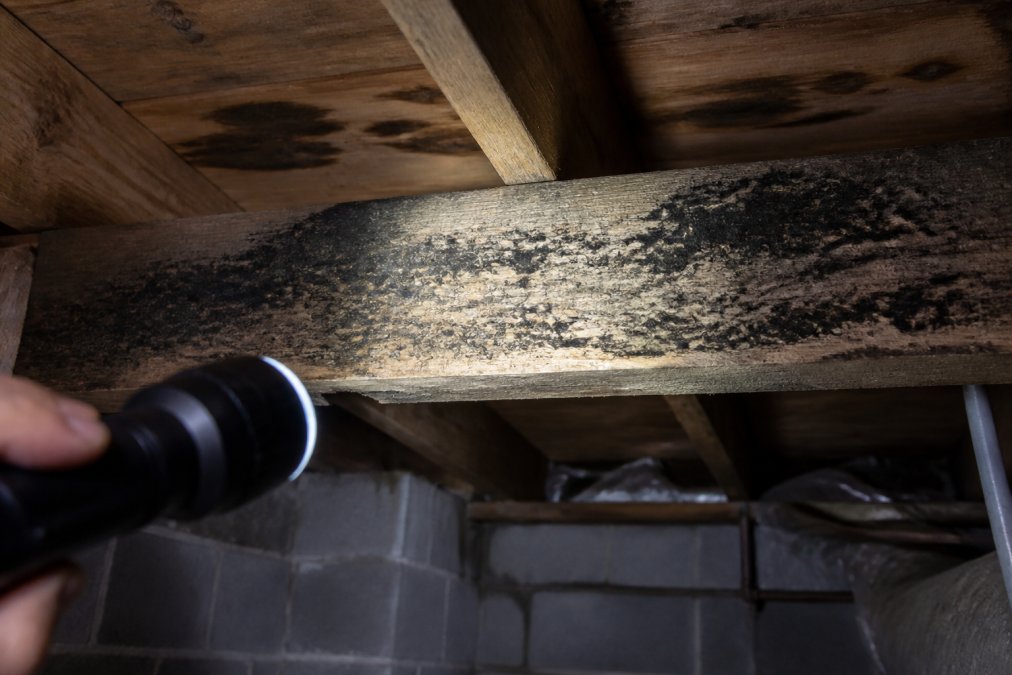
Other warning signs homeowners miss:
- Condensation on pipes, ductwork, or the underside of subflooring
- Warped or buckling hardwood floors above the crawl space
- A sudden increase in allergy-like symptoms indoors
- Insulation that sags, darkens, or pulls away from the joists
What most guides miss is that mold can be growing behind insulation for weeks before it’s visible. If you smell dampness but can’t see anything, that’s not reassurance, it’s a reason to get the space inspected.
Never dry-brush or sand visible mold without proper containment. Disturbing mold colonies releases spores into the air, which can spread contamination to the living space above and turn a contained problem into a whole-house one.
How to Fix Standing Water in Crawl Space
Standing water in a crawl space needs to be removed within 24 to 48 hours to prevent mold colonization on structural wood.
Here’s the sequence that actually works:
- Cut the power to any submerged equipment and confirm it’s safe before entering.
- Identify and stop the source, a burst pipe, a failed sump, or groundwater intrusion all require different fixes.
- Extract the water using a submersible pump or wet vacuum, working from the lowest point outward.
- Remove saturated debris and insulation that can’t be dried in place.
- Dry the space with commercial-grade air movers and dehumidifiers, not household fans.
- Treat affected wood and monitor moisture levels for several days before closing anything back up.
The step most homeowners skip is verification. Wood that looks dry on the surface can still hold moisture deep in the grain, and that’s exactly where mold starts. A moisture meter reading, not a visual check, tells you whether the space is actually dry. Maintaining these low moisture levels also discourages the infestations that often follow damp conditions, making it easier to implement sustainable pest control methods that protect your home without relying on harsh chemicals.
Crawl Space Encapsulation Cost Boise: What to Expect
Crawl space encapsulation cost in Boise depends on square footage, the extent of existing damage, and whether drainage or sump systems need to be added, so no single number applies to every home.
What drives the price up or down:
| Factor | Effect on Cost |
|---|---|
| Crawl space square footage | Larger spaces need more material and labor |
| Existing water damage or mold | Remediation must happen before encapsulation |
| Drainage or sump installation | Adds a system that wasn’t there before |
| Vapor barrier thickness | Heavier liners cost more but last longer |
| Accessibility | Tight or obstructed spaces take longer to work in |
Because pricing varies this much, the only reliable way to get an accurate figure is a professional inspection that accounts for your specific crawl space. Ness Restoration & Remediation Inc. provides direct insurance billing when the damage stems from a covered event, which removes one layer of stress from the process.
Ask any contractor whether they test moisture levels before and after encapsulation. A crew that skips the before-reading has no way to prove the job actually worked, and you’ll have no baseline if problems return.
DIY Moisture Control Tips vs. Professional Help
DIY moisture control makes sense for prevention. It rarely makes sense for active water damage or mold.
What homeowners can reasonably handle:
- Cleaning gutters and extending downspouts away from the foundation
- Regrading soil so it slopes away from the house
- Installing a basic vapor barrier over bare dirt
- Running a dehumidifier during humid months
- Checking the crawl space monthly for new leaks or condensation
Where DIY stops working is when moisture has already caused damage. Standing water, visible mold, soft wood, or a persistent musty smell all point to a problem that needs containment, drying equipment, and often remediation before encapsulation. Certified mold remediation follows established industry standards, and getting it wrong means the mold returns.
Prevention is a homeowner job. Remediation is a professional one. The line is visible damage, standing water, or mold you can smell but not see.
Crawl space moisture rarely stays a crawl space problem. It moves into your floors, your air, and eventually your repair budget. Ness Restoration & Remediation Inc. has handled water damage and mold remediation across the Treasure Valley since 1996, with 24/7 emergency response, IICRC-certified mold remediation, a five-year mold remediation guarantee, and direct insurance billing so you’re not fighting paperwork while your home sits wet. Request an inspection and get a clear picture of what’s happening under your floors before it becomes a bigger repair.
Frequently Asked Questions
What is the ideal humidity level for a crawl space in Idaho?
The ideal relative humidity for a crawl space in Idaho is between 40% and 50%. During Boise’s dry summers, outdoor air can be very dry, but winter and spring bring moisture. Use a hygrometer to monitor levels; if humidity consistently exceeds 55%, you likely have a moisture problem that needs attention. Keeping humidity in the ideal range helps prevent mold growth and wood rot.
Is a vapor barrier enough to stop crawl space moisture?
A vapor barrier is a critical first step, but it’s not always enough on its own. In Idaho, where soil can stay damp and winter condensation is common, you may also need proper drainage, ventilation adjustments, or a dehumidifier. Encapsulation, which seals the entire crawl space, often provides more complete moisture control than a simple barrier. Have a professional assess your specific situation.
How do I know if my crawl space has a moisture problem?
Common signs include musty odors, visible mold or mildew, damp insulation, condensation on pipes or joists, and warped or buckled wood. You might also notice higher indoor humidity or allergy symptoms. If you see standing water or persistent dampness, it’s time to call a professional for an inspection. Ness Restoration offers crawl space evaluations in the Treasure Valley.
What are the signs of water damage in a crawl space?
Look for water stains on foundation walls, sagging or fallen insulation, rust on metal components, and a white, chalky substance on concrete (efflorescence). Musty smells and increased pest activity are also red flags. If you spot any of these, address them quickly to avoid mold growth and structural damage. A professional can identify hidden issues.